
Retiring to Spain from the UK – Why and How
2 April 2026
UK to Costa Blanca Removals
24 July 2026
Moving to Spain from the UK has always been a popular choice for Brits seeking to build a new life in a warmer climate and an exciting culture.
If you’re thinking about moving to Spain before retirement age, there are likely to be two key factors to take into account:
- Find a place to live.
- Secure a job that adds value to your life.
With careful planning, your move to Spain can go smoothly, and you can easily find a new job that you enjoy.
Read on to discover how to relocate to Spain.
Is Spain a Good Place to Live?
Spain has stunning beaches, a rich culture and delicious food, making it a popular tourist destination. If you’re considering moving abroad, Spain is a great choice.
The weather in Spain is generally warmer than in the UK, so sunny days are standard all year round. Spanish people are also known for their friendliness and welcoming nature, which will make you feel at home as soon as you arrive.
And if you want a change from the fast-paced life in the UK, then you’ll benefit from Spain’s relaxed and laid-back atmosphere.
As if you need any more convincing that moving to Spain is a good idea, here’s our list of reasons to move to Spain from the UK.
Sunshine & Climate
Southern and Mediterranean Spain enjoys long, bright years—Málaga alone averages ~2,900 hours of sunshine annually, which makes staying active a lot easier.
Life Expectancy & Healthcare
Spain’s life expectancy is among the world’s highest (about 84 years in 2023), and UK state pensioners who become Spanish residents can normally access state healthcare via the S1 scheme (UK-funded, registered locally).
UK State Pension
If you reside in Spain (EEA), the UK State Pension receives an annual increase, unlike in many non-EEA countries.
Lower Day-to-Day Costs
Spain generally has lower daily costs compared to the UK. Price trackers show that the overall cost of living, including rent, is lower in Spain than in the UK.
Safe, Stable Country
Spain is ranked as more peaceful than the UK in the 2025 Global Peace Index.
Fast Internet
Spain has extensive fibre coverage (national figures above the EU average)
Easy Travel
With the most extensive high-speed rail network in Europe, it’s easy to get around Spain without a car.
Beaches & Outdoors
For decades, Spain has been a leader in Blue Flag beaches, which are known for their clean water, good accessibility, and the presence of lifeguards, ideal for regular sea swims and coastal walks.
Culture Galore
With approximately 50 UNESCO World Heritage sites, you are never far from something remarkable, including Roman ruins, Moorish palaces, Gothic cathedrals, and stunning national parks.
Existing Expat Communities
There are large English-speaking communities along the coasts and islands, which can simplify the first year while you learn Spanish.
Now you’re convinced, here’s what you need to start your search for a home and a job.
Where to Look for Your New Home in Spain
Before deciding where to live, consider your lifestyle and budget. If you are retired and have a fixed income, it’s important to choose a location that is affordable and has a pleasant climate. If you have small children, a good school and a safe neighbourhood are essential.
Research different locations by searching online, asking family and friends for recommendations, or consulting a real estate agent. If possible, visit each location in person to see which feels like home and offers the best quality of life. Additionally, make sure your future plans are taken into account when making your decision.
See our list of popular destinations on our Move to Spain from the UK page.
Rent or Buy a Home in Spain
Rentals in Spain present numerous advantages, but it’s essential to understand how the rental market operates and what rental agreements entail. If you’re looking for a long-term residence, consider options such as holiday or winter lets. Furnished apartments are also available.
When buying a property, be sure to research the local market prices and explore different properties. To ensure that you have adequate representation during the purchasing process, it may be wise to hire an independent lawyer who is knowledgeable about the Spanish market and fluent in both English and Spanish.
If you need a mortgage, your Spanish bank may assist you, or you can engage a broker to help you find the best mortgage deal.
Start Your Job Search in Spain
In Spain, there are diverse job opportunities available.
The Costa del Sol is an excellent location for job hunting. This well-developed coastline is the most popular tourist destination in Spain and attracts many expatriates.
Job opportunities in the Tech sector are abundant in cities such as Barcelona, Madrid, Valencia, and Seville.
Ibiza and Mallorca offer numerous job opportunities in public relations, hospitality and tourism-related industries. Additionally, the islands provide positions in the marine industry.
Discover the growing sectors in Spain and determine if your skills are in demand. Conduct thorough research when seeking employment opportunities.
Next, update your CV and cover letter to accurately reflect your qualifications for the Spanish job market.
Finally, start searching and applying for jobs online. It’s also beneficial to learn some basic Spanish. Before you leave, ensure that all your arrangements are in place.
Remember that remote work is an option, which we will explain in the next section. Launching your own business requires even more thought and planning.
Visas for Your Move to Spain
Employed in Spain
If a Spanish company hires you or your UK company transfers you, you will need to follow these steps. First, you must have the standard items listed above. Additionally, your employer or transfer sponsor needs to get the UGE-CE residence authorisation. Once they obtain this, you can apply for the visa using that approval.
Self-employed in Spain (Autónomo)
If you plan to start a business in Spain, you’ll need a business plan, a list of permits and licenses, proof of qualifications, and evidence of funds or investment to launch. You should file the EX-07 form and pay models 790-052 and 790-062 with your application.
Non-lucrative Residence Visa
If you plan to live in Spain without working, including remote work, you will need a non-lucrative residence visa. To get this type of visa, you must show you have enough money. This means having 400% of the IPREM (The Public Income Indicator for Multiple Effects). If you have dependents, add 100% of the IPREM per dependent.
You also need private health insurance or an S1 form, an ACRO police check from the last five years, a medical certificate, and the EX-01 form.
Once you arrive in Spain, you must apply for the tarjeta de identidad de extranjero (TIE) within one month at the Policía/Extranjería in your province. This card is required for long stays of over six months, such as for non-lucrative visas, self-employment, or studies.
Additionally, you need to register at your local town hall (empadronamiento) for your address, as this is often necessary for your TIE appointment and other administrative tasks.
Read our article on retiring in Spain.
Digital Nomad Visa
Remote work for non-Spanish clients or non-Spanish employers. Best if you keep a UK/foreign employer or mostly foreign clients.
What you’ll need for a digital nomad visa in Spain:
- Foreigner Identity Number (NIE) number, which you should get before applying for a visa.
- Proof of remote work (employee: contract + employer consent to work from Spain; self-employed: client contracts). Must show you’ve worked ≥3 months for the foreign company or have ongoing business.
- Qualifications/experience: degree or 3+ years’ experience in your field.
You have two options for social security: you can either stay under UK National Insurance with an A1 certificate (HMRC CA3822/CA3837) or choose to register with Spanish Social Security. Make sure to provide the necessary certificates and documents.
To apply successfully, your income needs to be at least 200% of Spain’s minimum wage. If you have a dependent, your income should be 75% of the minimum wage for the first dependent and an additional 25% for each extra dependent.
The digital nomad visa usually lasts for up to one year. According to the London Consulate, getting a tarjeta de identidad de extranjero (TIE) card is optional while your visa is valid.
However, you can still apply for a TIE, which is an official residence card, if you wish.
Paperwork for Your Move to Spain
The exact paperwork depends on how you’ll support yourself. Will you choose remote work, a Spanish job, to become self-employed or live off savings?
The London Consulate’s current requirements consist of the following common paperwork needed for most long-stay visas.
- Passport valid for more than 1 year, 2 blank pages, issued less than 10 years before your move.
- National visa application form + visa fee; submit via the BLS Spain Visa Centre for your consular district.
- Proof of UK address in the consular district.
- Criminal record certificate (ACRO) — period varies by route; apostilled + sworn Spanish translation.
- Health cover: either qualifying private insurance in Spain, or (where allowed) evidence of social-security cover.
- Apostilles + sworn translations for UK documents (marriage/birth, medicals, ACRO, etc.).

Plan Your Move to Spain from the UK
Notify the Authorities of Plans to Make the Move
- Cancel utilities and other services in the weeks and months leading up to your move.
- Notify your bank, insurance company and former employer of your address change.
- Inform HMRC of your move abroad and request any tax relief you are entitled to.
Choose What to Store, Ship or Sell
When relocating to Spain, you’ll need to determine what to ship, sell, and store. This can be a challenging decision, especially if you have many items you cherish.
If you plan to live in Spain permanently, it is likely that most of your belongings will need to be sold; this typically includes larger items, such as furniture and appliances.
Alternatively, you may choose to hire a removal company to assist with the transportation of your belongings. If you have sentimental or valuable items, you might prefer to store or ship them instead of selling them.
UK Registered Vehicles in Spain
You can bring your UK-registered car to Spain; however, if you become a Spanish resident, you cannot keep it on UK plates permanently.
Residents must import and register (matriculate) the car in Spain, typically within 30 days, or stop driving it. Non-residents are allowed to use a vehicle with foreign plates for a short period, but once you become a resident, you must change to Spanish plates.
Find a Trustworthy Removal Company
Hiring a reputable moving company is crucial for the UK to Spain furniture removals.
But how do you choose the best one for your situation?
It’s not enough to look at the company offering the cheapest furniture removals. What you need is a company you can rely on to handle your possessions with care.
Choose a removal company with relevant experience, preferably one with plenty of experience in moving to Spain. Read online reviews to find out how good the service is.
You should also ensure the company provides all the services you need, including packing, loading and shipping. Before making your final decision, compare quotes from several companies.
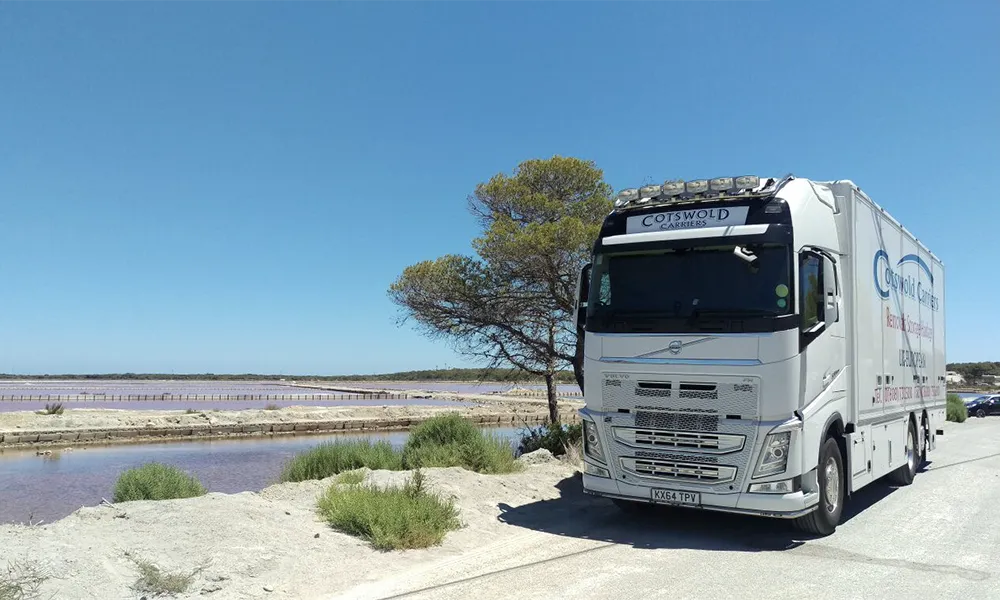
Of course, we know an excellent removal company you should contact today – you guessed it, that’s us, Cotswold Carriers.
Start to Pack Early
Packing early helps avoid last-minute stress and ensures everything is in order. Make a list of everything you need to pack, and start gathering everything. You should also label all your boxes clearly, so you know what goes where upon arrival.
Start packing well in advance of your move so that you have plenty of time to do it properly. And finally, pack some essentials for the journey itself.
Moving Pets Abroad
When relocating from the UK to Spain, there are several important considerations for bringing your pet. First, ensure that your pet’s vaccinations are up to date. You’ll also need to obtain an animal health certificate from your veterinarian. Once you have these documents, you can book a pet-friendly flight.
Be sure to pack your pet’s food, toys, and bedding as part of your move. Finally, remember to register your pet with the local authorities once you arrive in Spain.
Need Reliable Removals to Spain?
At Cotswold Carriers, we’re here to make moving to Spain much easier for you! Contact our expert team today for a quick quote.
Please note that this blog post is for informational purposes only, and information may change. Always check the official websites, and we have provided links wherever possible.